The Parent's Guide
Which boat is my kid sailing?
Every regatta listing names a class, like C420, ILCA, or Optimist, as if you're supposed to already know what that means. Here's what each boat actually looks like, who sails it, and where to go for the official word.
Youth Boats
The boats most kids grow up through: a seven-year-old's first Optimist, the club and travel-team trapeze boats that follow, and the performance classes a sailor chases once they've outgrown all of those.
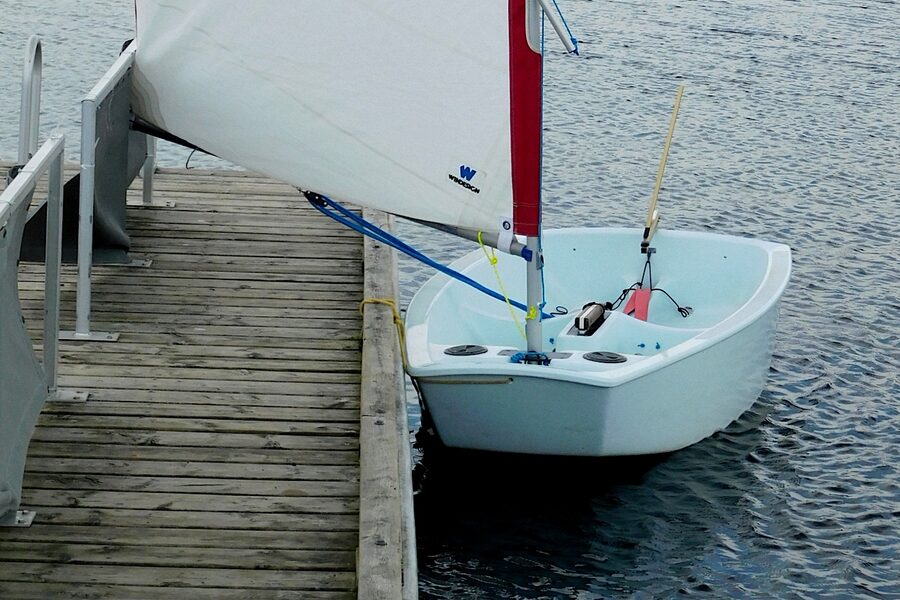
Optimist ("Opti")
The boat almost every young sailor starts on. A small, stable, single-handed pram-bow dinghy built to be simple and nearly impossible to sink: the on-ramp to every other class on this page.
- Crew 1 (solo)
- Typical age 7–15
- Length 7 ft 9 in
Photo: dinghyman, CC BY-SA 2.0, via Flickr. Resized from the original.
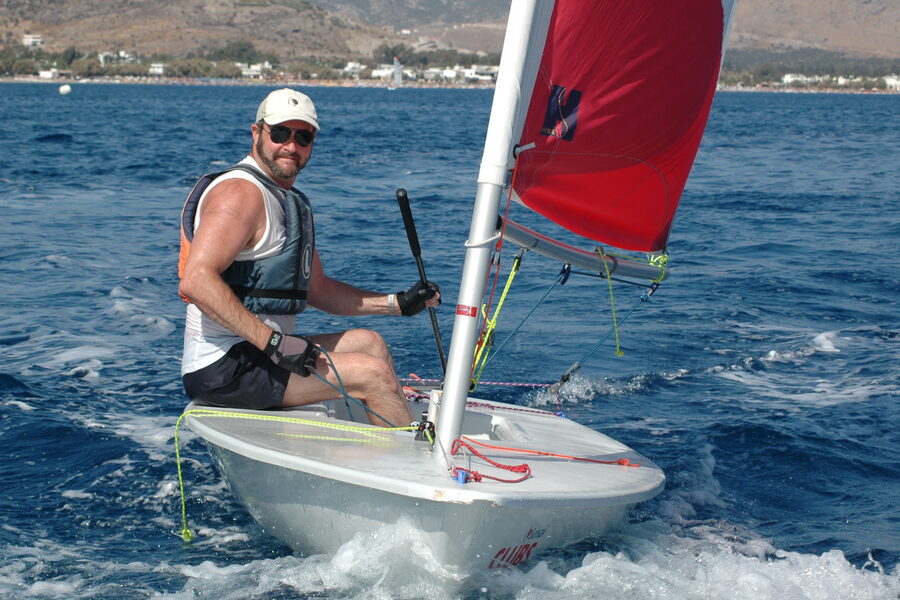
ILCA (formerly "Laser")
A single-handed racing dinghy sailed worldwide and in the Olympics. One hull, three interchangeable rig sizes (ILCA 4, 6/Radial, and 7/Standard), so the same boat scales from a lighter junior sailor up to an adult.
- Crew 1 (solo)
- Typical age 12+ (rig-dependent)
- Length 13 ft 10 in
Photo: Etnoy, CC BY-SA 3.0, via Wikimedia Commons. Cropped from the original.

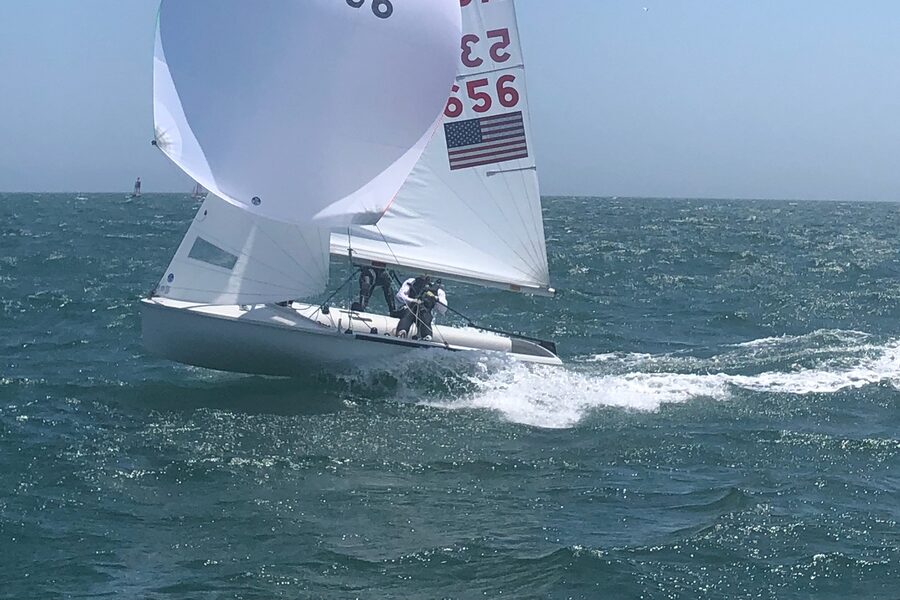
i420 (International 420)
A two-person trapeze-and-spinnaker boat recognized by World Sailing, with a lighter hull and tapered mast built for real speed, and a common feeder into college sailing and the 470.
- Crew 2 (skipper + trapeze crew)
- Typical age 13+
- Length 13 ft 9 in
Photo: Micky Munns, CC BY-SA 4.0, via Wikimedia Commons.

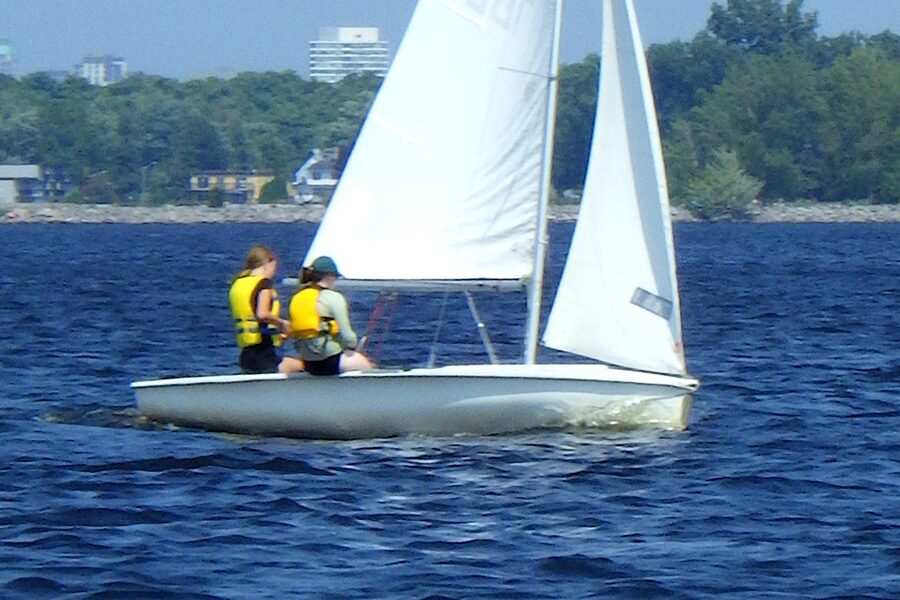
C420 (Club 420)
The two-person boat behind almost every US high school and college regatta. Same rig as the i420, trapeze and spinnaker included, but a heavier hull and stiffer, untapered mast built to survive institutional team racing rather than to plane fastest.
- Crew 2 (skipper + trapeze crew)
- Typical age 13+
- Length 13 ft 9 in

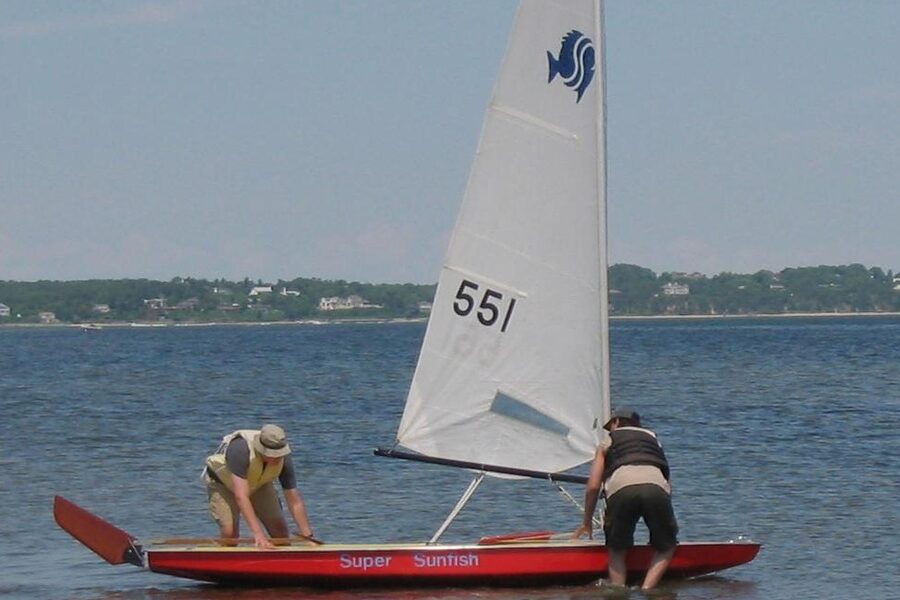
Sunfish
A simple, lateen-rigged single-hander that's been a summer-camp and lake-club staple for generations. Less common in fleet racing than the classes above, but a huge, affordable used-boat market makes it a common first family boat.
- Crew 1 (sometimes 2, casually)
- Typical age 8+
- Length 13 ft 9 in
Photo (Super Sunfish, a stretched sibling of the standard Sunfish): William Dilgard, CC BY-SA 3.0, via Wikimedia Commons.

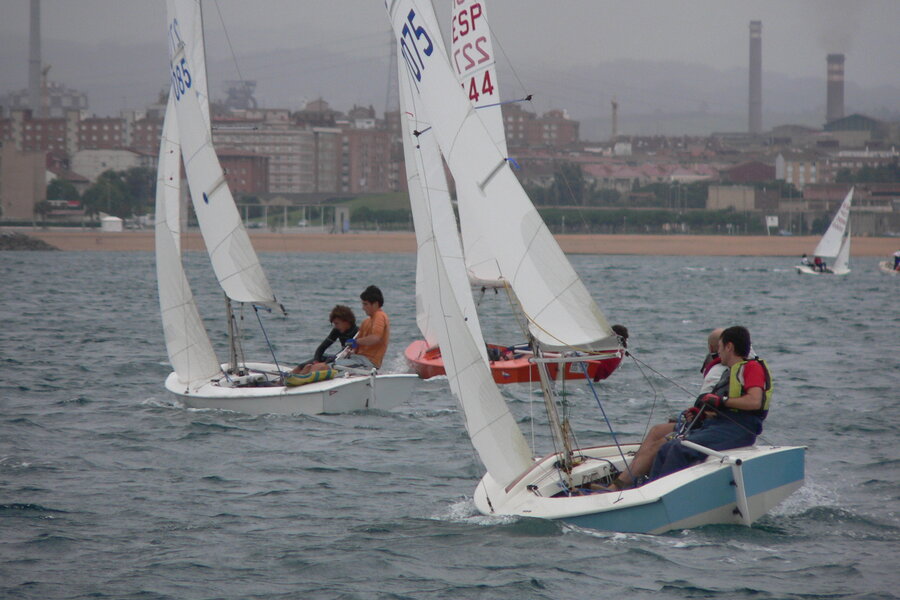
Snipe
A two-person hiking boat (no trapeze) that's been racing since the 1930s, with one of the oldest and most active fleet-racing class associations in the country. A common next step for a family that's outgrown the Optimist but isn't ready for a trapeze boat yet.
- Crew 2 (skipper + crew, hiking)
- Typical age 13+
- Length 15 ft 6 in
Photo: Banderas, public domain, via Wikimedia Commons. Cropped from the original.

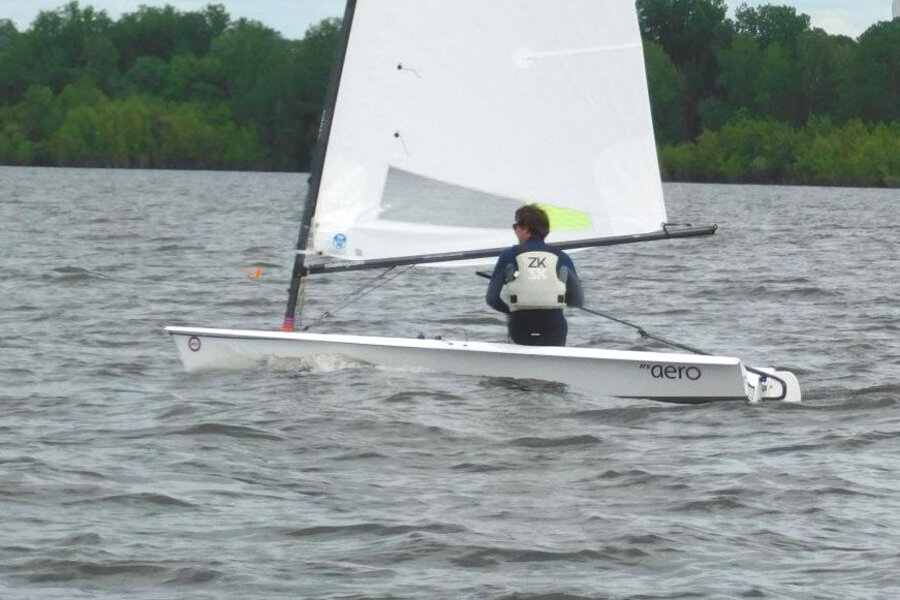
RS Aero
A modern, ultra-light single-hander built more like a performance kayak than a traditional dinghy: molded carbon/foam hull, no boom vang or traveler to fuss with, and three rig sizes (5, 7, and 9) that scale from a young junior up to a full-size adult.
- Crew 1 (solo)
- Typical age 10+ (rig-dependent)
- Length 12 ft 4 in
Photo: Ahunt, CC0, via Wikimedia Commons. Cropped from the original.

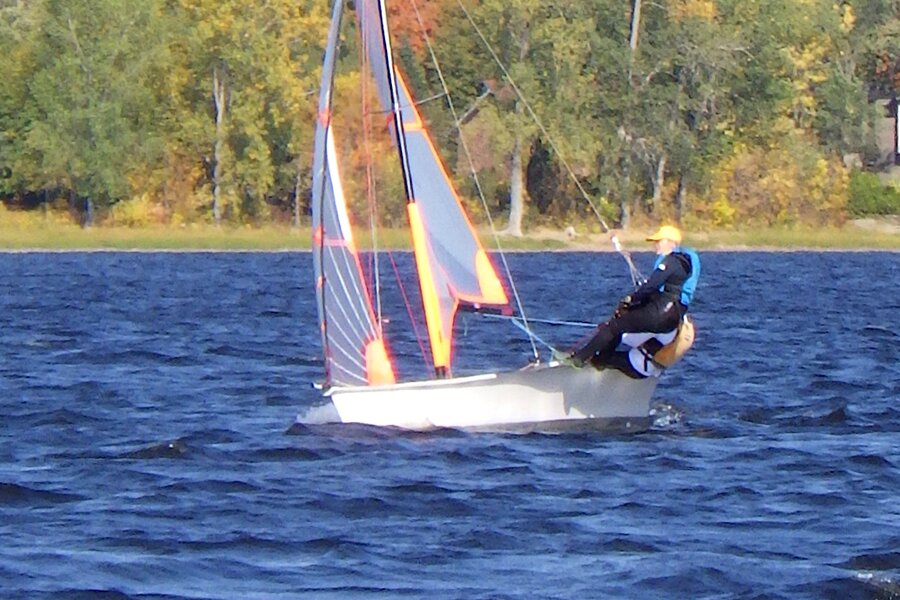
29er
A single-trapeze, two-person skiff built for planing performance, with an asymmetric spinnaker and a rig that rewards active crew work. The standard step up for a family chasing speed once they've outgrown the club boats, and the direct feeder into the 49er.
- Crew 2 (skipper + trapeze crew)
- Typical age 13–19 (youth)
- Length 14 ft 7 in
Photo: Ahunt, CC0, via Wikimedia Commons. Cropped from the original.

Nacra 15 (youth catamaran)
A youth development catamaran built as the on-ramp to multihull racing, sailed one-up or two-up depending on the sailor's size and experience. The boat national youth squads use to introduce trapeze-and-cat sailing before a jump to the Nacra 17.
We haven't found a freely licensed photo of a Nacra 15 specifically, so we're leaving this one text-only for now rather than guess.
- Crew 1 or 2 (configurable)
- Typical age 12+
- Length 15 ft 1 in
College Boats
The boats you'll see once a sailor moves from club and travel-team racing into college dinghy sailing.
Z420 (college racing)
The boat you'll see if your sailor moves on to college racing: a no-spinnaker, no-trapeze two-person dinghy built specifically to ICSA's collegiate rule. It looks like a C420 at a glance but is a distinct hull, purpose-built for the tight, short-course team racing colleges sail rather than the trapeze-and-spinnaker racing of club and travel-team sailing.
We haven't found a freely licensed photo we're confident is a Z420 specifically (it's easy to confuse with the FJ, another common college boat) — so we're leaving this one text-only for now rather than guess.
- Crew 2 (skipper + crew, hiking)
- Typical age college (18+)
- Length 13 ft 9 in
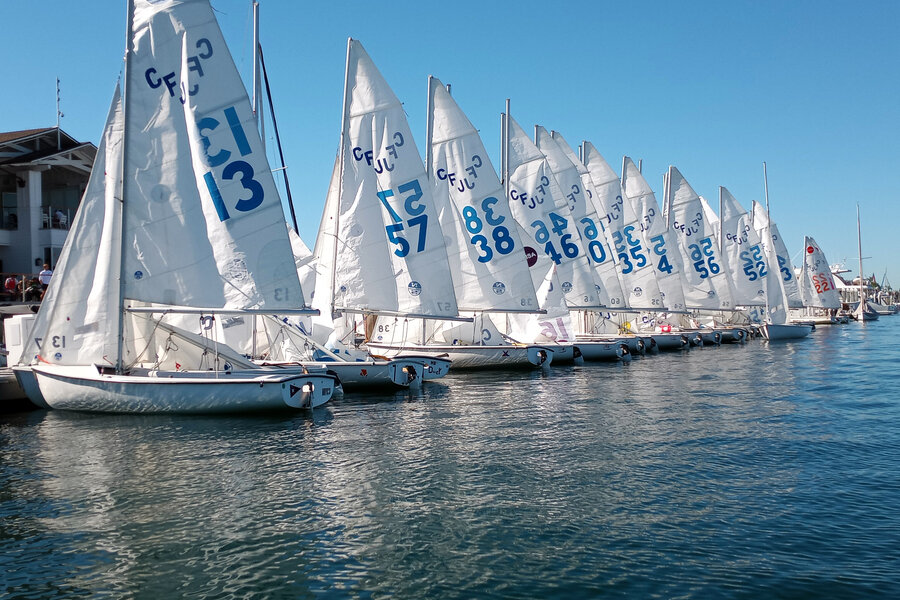
FJ (Flying Junior)
Designed in 1955 as a junior trainer for the Olympic Flying Dutchman, the FJ has long since become one of its own: a two-person trapeze-and-spinnaker boat that, alongside the C420/Z420, is one of the two boats most US college teams actually keep in their fleets. Narrower and more rounded than the C420, with a reputation among college sailors for a better upwind feel. It's not college-exclusive (plenty of youth club programs sail it too), but it's grouped here for now since that's where it's most often encountered.
- Crew 2 (skipper + trapeze crew)
- Typical age 13+ through college
- Length 13 ft
Photo: Don Ramey Logan, CC BY-SA 4.0, via Wikimedia Commons. Cropped from the original.

Olympic Boats
The elite, high-performance classes most families will only ever see on TV. This is the aspirational end of the pipeline the boats above feed into.
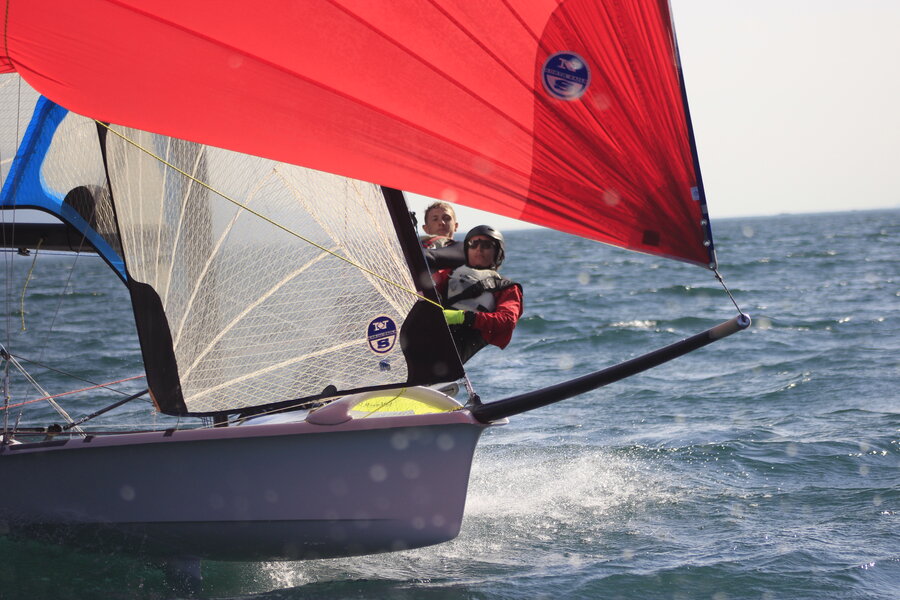
49er
The double-trapeze skiff that headlines Olympic men's sailing: both sailors wire out over the water, hiked flat, chasing speeds no traditional dinghy can touch. Overkill for a first performance boat, but the aspirational target once a sailor has outgrown the 29er.
- Crew 2 (double trapeze)
- Typical age adult/elite (18+)
- Length 16 ft 5 in
Photo: Tschou12345, CC BY-SA 4.0, via Wikimedia Commons. Cropped from the original.

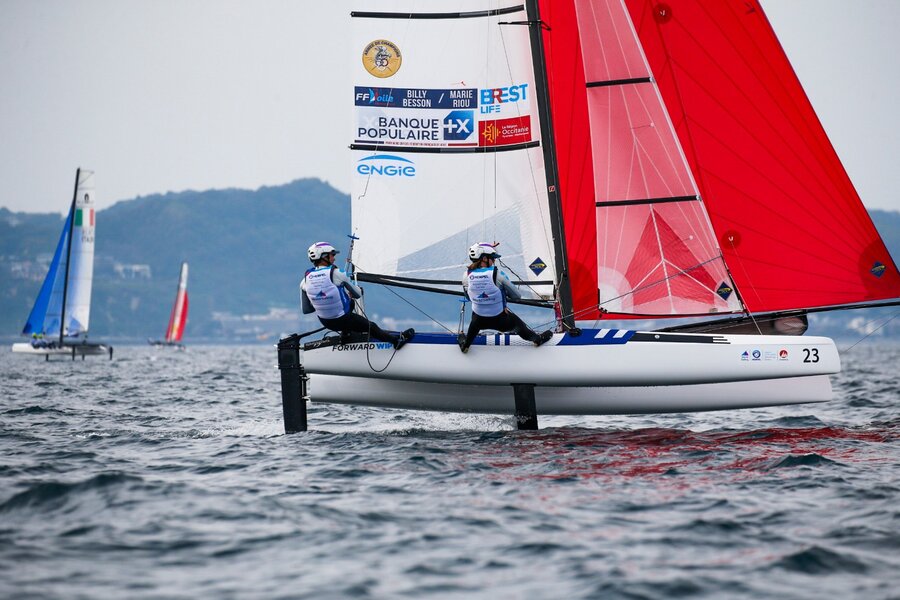
Nacra 17 (Olympic)
The Olympic mixed-multihull class: a foiling catamaran sailed by one man and one woman, hiked out on wide trapeze racks with the hulls lifted clear of the water. This is the boat most families will only ever see on TV, not at a club regatta.
- Crew 2 (mixed gender, double trapeze)
- Typical age adult/elite (Olympic)
- Length 17 ft 3 in
Photo: THTACY, CC BY-SA 4.0, via Wikimedia Commons. Cropped from the original.
